The period between Black Friday and Christmas can increase financial planning pressures for businesses. In addition to operational expenses, companies with international teams must organize payments to employees, freelancers, and suppliers across different countries. Therefore, scheduling transfers in advance and monitoring foreign exchange costs can help prevent unexpected problems during the final weeks of the year.
For US businesses working with professionals in Latin America, this planning involves more than setting aside money for payments. Companies must consider banking deadlines, multiple currencies, payment due dates, and approval processes. As a result, a structured approach to international payments for businesses can provide greater financial predictability and organization at year-end.
Why Do International Payments Require More Planning at Year-End?
November and December often bring multiple financial commitments that businesses must manage simultaneously. Companies may face increased expenses related to marketing campaigns, supplier contracts, and projects with tighter delivery deadlines. At the same time, they must maintain recurring payments to the teams supporting these operations.
The challenge becomes greater when payment recipients are located across different countries. After all, each transfer may involve currency conversion, bank account verification, and processing through different financial institutions. Consequently, leaving these activities until the final days of the month can increase the risk of delays.
Furthermore, banking calendars do not always align with commercial schedules. Public holidays, weekends, and processing hours can affect when funds become available. Therefore, financial planning should consider when beneficiaries actually receive their payments, not simply when transfers are initiated.
Swift explains that banking cutoff times and financial institutions’ operating schedules can affect international transfer speeds. For this reason, scheduling transactions in advance and understanding provider processing times can help businesses avoid last-minute transfers.
How to Organize an International Payment Calendar
The first step is to identify all financial obligations scheduled for November and December. This overview should include recurring payments, temporary contracts, outsourced services, and expenses related to year-end campaigns. This allows businesses to understand their financial commitments before initiating transfers.
Next, companies should organize expenses according to when recipients need to receive their funds. For example, a payment due in December may require approval and processing during November. Therefore, establishing internal deadlines ahead of actual payment dates reduces dependence on last-minute transactions.

It is also important to define who is responsible for each stage. Finance teams can centralize payment verification, while managers approve expenses associated with their departments. This structure improves organization and reduces the possibility of duplicate or overlooked payments.
What Should an International Payment Calendar Include?
An international payment calendar should contain enough information to guide the entire process. In addition to payment amounts, it should help finance teams quickly identify responsibilities and deadlines. Consider including the following information:
- Employee, freelancer, or supplier name.
- Destination country and receiving currency.
- Contractually agreed payment amount.
- Expected date of receipt.
- Internal payment approval deadline.
- Transfer method and estimated processing time.
- Payment status and associated transaction records.
Organizing this information makes it easier to identify periods with higher payment volumes. Additionally, businesses can distribute responsibilities and prepare funds in advance. This structure also simplifies payment reconciliation at the end of each month.
How to Maintain Foreign Exchange Predictability Between November and December
Exchange rate fluctuations create another challenge for companies paying professionals in different currencies. Even when contracted payment amounts remain unchanged, the amount needed to complete a transfer may vary. Therefore, monitoring foreign exchange exposure is an important part of international financial planning.
The International Trade Administration, part of the US Department of Commerce, highlights the risks associated with currency fluctuations. According to the organization, exchange rate movements can affect the financial results of international operations. For this reason, businesses should understand their exposure before defining a payment strategy.
Consider a US company that pays professionals in Brazil, Mexico, and Colombia. Some contracts may establish payment amounts in US dollars, while others specify local currencies. In this situation, each arrangement affects how currency fluctuations influence the company’s budget.
When compensation is established in local currency, the cost in US dollars may fluctuate with exchange rates. Conversely, contracts denominated in dollars transfer part of that exposure to recipients who use local currencies. Therefore, clearly defining contractual currencies helps both parties understand the financial conditions.
How Can Businesses Reduce Currency Uncertainty?
Financial predictability does not depend on finding the perfect moment to exchange currencies. Instead, companies need to understand costs, establish limits, and decide how to manage potential fluctuations. This approach reduces dependence on exchange rates available on a particular day.
The International Trade Administration presents different strategies for managing foreign exchange risks in international operations. These include defining contractual currencies and, when appropriate, using financial instruments designed to manage currency exposure. However, each business should evaluate the costs and suitability of these alternatives.
For recurring payments, businesses may also benefit from platforms that support amounts denominated in dollars or recipients’ local currencies. CambioPay offers this functionality for payments in its supported markets. This allows companies to establish how exchange rate fluctuations affect the amounts sent or received.
How Batch Payments Can Simplify Financial Operations
Businesses working with international teams often need to pay multiple professionals within the same period. When every transfer requires a separate process, administrative workloads can increase quickly. Additionally, repeatedly entering payment information and completing approvals can consume valuable finance team resources.
Batch payments help businesses organize this process. Instead of preparing each transfer individually, companies can consolidate beneficiaries and payment amounts into a single operational workflow. This allows finance teams to process multiple payments with fewer manual steps.

This approach can benefit companies working with remote teams, outsourced agencies, or independent contractors. During November and December, the advantages become more noticeable when multiple contracts have similar payment deadlines. Therefore, consolidating transactions can simplify expense management and reduce repetitive tasks.
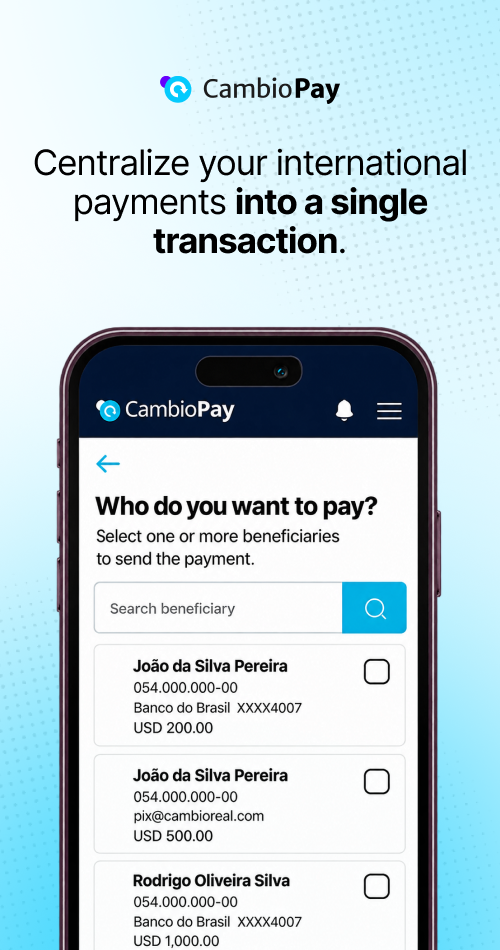
With CambioPay, US businesses can import spreadsheets containing beneficiary information and process payments in batches. Funds are distributed directly to local bank accounts in supported countries. Additionally, the platform provides transaction records and reports that help businesses monitor individual payments.
How to Plan Payments to Employees, Freelancers, and Suppliers
Although employees, freelancers, and suppliers all contribute to operational expenses, their contractual payment conditions may differ. Some receive payments on fixed dates, while others depend on project completion or service approval. Therefore, organizing these categories separately helps prevent errors during financial planning.
Employees and International Teams
Recurring payments should follow a predictable schedule, with amounts and dates established in advance. Additionally, businesses should account for vacation periods, holidays, and potential absences among payment approvers. This helps maintain financial operations even when some team members are unavailable.
It is also important to review the contractual and legal obligations associated with each employment arrangement. International payment processing does not replace applicable employment, tax, or administrative responsibilities. Therefore, companies should manage these requirements independently of their chosen payment platform.
In our article about payroll in Brazil for US companies, we explain how to organize beneficiaries, amounts, and recurring transfers. Although the article focuses on Brazil, several practices also apply to other markets. These include verifying banking information and reconciling completed payments.
Freelancers and Independent Contractors
Independent professionals often work under agreements tied to projects, deliverables, or specific service periods. During year-end, some companies also hire additional support for marketing campaigns and commercial operations. Consequently, financial planning should account for both recurring payments and temporary commitments.
A good practice is to establish delivery and approval dates before each project ends. Finance teams should also receive the information necessary to process payments on time. This helps businesses avoid accumulating payment requests during the final weeks of December.
Suppliers and Business Partners
Supplier payments require attention to due dates and negotiated terms. Some businesses must settle invoices before starting new projects or renewing contracts for the following year. Therefore, scheduling these expenses in advance helps maintain operational continuity.
Additionally, companies should verify banking details and required documentation before initiating international transfers. Outdated information can cause processing failures or require additional verification. Maintaining accurate beneficiary records helps reduce obstacles when working with international business partners.
Why Should Cash Flow Planning Follow Your Payment Calendar?
A payment calendar shows when businesses need to initiate transfers, but it does not indicate whether sufficient funds will be available. To determine this, companies must compare expected payments with projected income and available reserves. This analysis helps identify periods when expenses may exceed incoming funds.
The US Department of Commerce’s Trade Finance Guide addresses the importance of managing financial risks in international operations. Although the guide primarily focuses on international trade, its principles help explain the financial impact of payment timing. After all, moving funds between different markets requires careful coordination.
During November and December, this analysis should account for fixed expenses and extraordinary financial commitments. Businesses should also maintain a buffer for exchange rate adjustments, fees, and unexpected operational needs. This reduces dependence on urgent transfers to meet payment obligations.
One practical approach is to forecast cash flow on a weekly basis. This makes it easier to identify periods with concentrated expenses and make decisions about available funds. Additionally, businesses can compare projected amounts with actual payments to improve financial visibility.
How Does CambioPay Simplify International Payments at Year-End?
CambioPay was developed for US businesses that need to pay teams, freelancers, and suppliers across Latin America. The platform allows companies to organize beneficiaries and send funds directly to local bank accounts in supported countries. This helps businesses centralize part of their international payment operations.
The solution currently supports payments to Brazil, Mexico, and Colombia, with recipients receiving funds in their respective local currencies. US businesses can fund transactions through supported methods, including ACH and wire transfers. Furthermore, recipients do not need to create a CambioPay account or install an application to receive payments.
Another available feature is batch payment processing. Businesses can import spreadsheets containing beneficiary information and organize multiple transfers through the platform. This reduces the manual work involved in preparing individual transactions.
CambioPay also allows companies to define payment amounts in US dollars or local currencies, depending on the transaction. This functionality helps establish how currency conversion will affect each payment. Consequently, finance teams can plan transactions with greater clarity.
According to the platform’s published conditions, payments may arrive within one business day in supported markets. In Brazil, payments received through Pix typically arrive on the same day. However, businesses should still account for applicable funding, verification, and processing requirements when planning transfers.
For companies comparing payment providers, our article about alternatives to Wise for paying teams in Brazil presents relevant evaluation criteria. The content discusses costs, processing times, and recurring payment organization. These factors can also help businesses assess international payment solutions for larger operations.
Checklist for Organizing International Payments Before Christmas
As December approaches, businesses should review their financial commitments and confirm payment processing deadlines. This preparation helps prevent holidays and staff absences from disrupting the payment calendar. Therefore, companies should complete important checks before year-end.
- Gather all payments scheduled for November and December.
- Organize employees, freelancers, and suppliers into separate categories.
- Confirm payment amounts, contractual currencies, and banking details.
- Identify relevant holidays and payment processing cutoff times.
- Establish internal deadlines for expense approvals.
- Forecast cash flow and account for potential currency fluctuations.
- Consider batch payments for operations involving multiple recipients.
- Confirm that sufficient funds are available before initiating transfers.
- Monitor payment statuses and potential processing failures.
- Organize transaction records and reports for financial reconciliation.
Completing these steps allows businesses to manage their obligations with greater predictability. Additionally, the process can establish a foundation for recurring payments in the following year. This means year-end planning can also improve long-term financial operations.
Prepare Your International Payments for an Organized Year-End
The period between Black Friday and Christmas requires careful attention to payment schedules, cash flow, and transaction conditions. For companies working with international teams and suppliers, these activities also involve multiple currencies and processing deadlines. Therefore, making financial decisions in advance helps maintain organization during the final months of the year.
With CambioPay, US businesses can centralize payments to professionals and suppliers in Brazil, Mexico, and Colombia. The platform offers batch payments, currency conversion, and direct deposits into local bank accounts. This allows finance teams to reduce manual processes and gain greater visibility into international payments.
Pay your international team with ease and low fees using CambioPay!
Centralize payments for employees, freelancers, contractors, and suppliers across Latin America in a single operation. With CambioPay, your company:
- Pays in dollars, and your contractors receive it in their local currency;
- Reduces manual processes and gains more control over international workflows;
- Receives low-rate alerts in real time;
- Schedules payments strategically based on the day’s exchange rate.