Pix with Your Payment Systems

Pix with Your Payment Systems

A Step-by-Step Guide

Similar to Zelle, Pix Payments are the preferred method of quick payments in Brazil. It is a local payment system but some Payment companies offer it as an international option as the money will end up in your US. Business bank account. But how does that work?

Today we will walk you through the process of executing International Pix Payments step by step.

Link Payments from Brazil to the US

International payment systems typically allow businesses to request payments from customers by providing a payment link. This link directs customers to a checkout page where they can confirm the payment amount and select their preferred payment method.

Creating a Payment Link: Depending on the platform, the payment link can be shared in many ways. CambioCheckout, for example, enables businesses to generate a payment link, which can be sent to customers via email, copied, or shared on WhatsApp or even integrated as a payment button to your website.

Checkout Process: To comply with legal requirements and prevent fraud, the checkout process usually requires customers to quickly register their basic information or log in. Here, they can choose their preferred payment method: Pix, Boleto, or credit card.

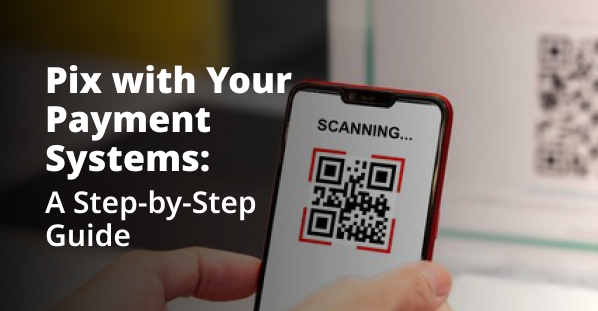
Pix Payment: For Pix, a QR code and a text code are generated. Customers can copy the text code on mobile devices or scan the QR code using their internet banking app on desktops. This code, readable by any internet banking app in Brazil, contains all necessary payment details and all the customer has to do is click the option to confirm payment.

Payment to a Processor: Pix payment is made locally to a processor in Brazil, in BRL. Pix is automatically compensated, Which means as soon as the buyer makes a payment, they receive a confirmation. A decent payment platform such as CambioCheckout, should also be able to notify you that PIX was successfully made.

Currency Exchange: This is where things get “international”. A couple steps behind, during the checkout process when the QR code is generated, a currency exchange rate is also applied to a transaction. This means that the customer has agreed to a certain amount of USD related to that payment amount in BRL. Once the processor receives the funds in BRL, it will convert it to USD using that fixed exchange rate. This is why transactions must be paid usually within the same business day in order to be valid.

Settlement: Each payment processing company will have their own set of rules when it comes to settlement. With CambioCheckout, automatic daily ACH payments are made to the US. Business’s bank account regardless of the amount. ACH payments are free of charge for your business. In this case, your PIX will arrive in 1-3 business days and there is no need for any actions on your side. Some other processors may require a minimum volume before withdrawal. Usually because they operate with International Wire Payments instead of ACH so be aware – there will probably be an extra U$30 fee for each settlement.

In summary, the process is quite simple and fast. Let’s just break down into steps:

  1. Your company generates and shares a payment link
  2. Quick customer registration + QR code generation (PIX transaction with a fixed FX rate)
  3. Pix Payment via Online Banking
  4. FX and International Transfer Processing
  5. Settlement: ACH in 1-3 business days.


Easy, right? Let us add a cherry on top: Customers may have the option to finance their Pix Payment through their bank, which is a very attractive alternative to installment payments on credit cards. This won’t affect the payment amount you receive but is worth considering for customer convenience.

Exploring Your Options

Choosing the right international payment system is crucial for the success of your business. For a closer look at the process, we invite you to request a live demo. During this free demonstration, we’ll provide an in-depth walkthrough on setting up Pix Payments and guide you through the payment process from your customer’s perspective.

Until then, we hope that this information was useful!

Best Ebanx Alternatives for Payments in Brazil

Alternatives to Ebanx when making Payments in Brazil

Check it out if you want to accept payments from Brazil.

Ebanx is going through a tough time now related to their customer satisfaction both on the client side and buyer side.

Today, we’re going to show you alternatives to Ebanx if you want to accept payments from Brazil and Latin America in general and why exactly would you prefer such options. Check it out!

Why would you not use Ebanx?

Now sure, you’re looking for alternatives for Ebanx already, but why would a company choose to not use one of the most successful payment gateways in Brazil?

First off, let’s talk about price. Ebanx is not very transparent about pricing. If you look on their website you’ll notice that there are no mentions of how they charge for their services.

If we check online, we’ll find that there is a 200 USD subscription fee per month plus fees. That’s mostly fine if you have a bigger business, but it is a reason to be concerned if you run a smaller operation.

A monthly fee can be a problem if you’re trying to validate a market. If you’re just starting out, or if you don’t have a continuous flux of cash coming from Brazil.

The lack of transparency regarding whether this fee is tied to a contract and its duration raises concerns about potentially ongoing costs.

And, of course, this cost is going to cut into your bottom line.

The other issue is related to customer satisfaction. 

Handling international payments, especially from Brazil, involves navigating complex tax laws, legal compliance, and fees. 

Therefore, support or the lack of it, can be a big problem.

Ebanx’s customer support has been criticized for its inadequacy, with a notable lack of responsiveness on Brazil’s major review platform, Reclame Aqui, where over 50% of customer complaints remain unanswered. 

Reclame Aqui considers Ebanx a “Not Recommended” Business, based on this lack of customer support.

Then there is the client side of the issue. Again, with a little bit of research on software review websites, we can see that a lot of business owners are unhappy with their service.

Review Ebanx from Capterra - "Looking for alternatives as I write this"

Their main complaints seem to be related to pricing, but also lack of tech support when implementing the API, which can be tricky.

Right, so what is the alternative for a company wanting to process payments from Brazil with better support and more cost effectiveness?

Introducing CambioCheckout

CambioCheckout emerges as an ideal solution for medium to small-sized businesses in sectors like law, IT, education, SASS or retail, seeking an easily scalable payment processing solution with robust support for international transactions, particularly in Brazil.

Key Advantages of CambioCheckout:

  • Personalized Support: CambioCheckout distinguishes itself by offering personalized support via live chat in both Brazilian Portuguese and English, catering to the needs of both businesses and their clients.
  • No Hidden Fees: Or no fees whatsoever for your company. Remarkably, CambioCheckout operates without subscriptions, fees, or hidden charges for companies.
    Businesses receive the exact amount in USD billed to customers, thanks to a revenue model based solely on exchange rate spread. This means your customer pays about 2% spread on transactions and there are zero costs to businesses.
  • Comprehensive Free Services: The platform provides a free API, IT support, and onboarding process, ensuring no additional costs for businesses exploring this solution.


  • Settlements without minimum requirements:  While huge processors such as Ebanx require a minimum amount for balance withdrawal, CambioCheckout does not.
    You will automatically receive payments directly to your US. bank account regardless of your volume.This aligns with the platform’s intent to serve small and medium sized businesses with efficiency.
  • Flexible Payment Options: CambioCheckout supports diverse payment methods like Pix, Boleto, and national credit cards, offering convenience through payment links shared via email or WhatsApp.Funds are transferred to an American bank account within three business days.
  • Unmatched Customer Support: Unlike Ebanx, CambioCheckout boasts a 100% response rate on Reclame Aqui, and a Live human chat right on the payment page, ensuring all customer payment issues and questions are promptly addressed.


CambioCheckout stands out as a tailor-made solution for small to medium sized businesses that wish to expand operations to the Brazilian market, offering significant advantages in terms of cost-effectiveness and customer support. 

We encourage you to consider CambioCheckout as a viable alternative for your business. 

Top5 Best Pix Systems for Brazil Payments
5 Best Pix Systems for Brazil Payments

Which are the best systems to offer Pix Payments? Here’s our top 5.

Finding the best system for your business to process Pix Payments from Brazil can be tricky, so today we’re going to show you 5 of the best systems in the market so you can decide based on your business special needs. Check it out!

Why have a system for Pix Payments?

If you have a business in the US and you want to accept Pix Payments from Brazil, you’ll need some kind of gateway to let your customer pay by pix and send that money from Brazil to the USA.

Ideally, that process will happen directly bank to bank. That means you won’t have to keep an account in Brazil and send the money yourself, therefore avoiding unnecessary taxes, fees and time wasted.

But you don’t need just a gateway, you need a tool that will actually help your company manage those payments from Brazil.

You need a software that will improve the experience of your customer and allow them to make easy instant payments by Pix.

We also want to be cost-effective in this choice. Any fees that we have to pay will inevitably trickle down to the customer, letting our prices less competitive.

Another thing to be mindful of is the time to pay. How much time it takes for the platform to process the payment and get the money to your account in the USA will determine how fast your capital can flow.

Therefore, this system must offer:

  1. Payment Gateway Technology: Ideally through an API for seamless e-commerce integration.
  2. Direct Bank Transfers: Ensuring funds flow directly from Brazil to your U.S. account.
  3. Comprehensive Reporting: For monitoring incoming payments and their statuses.
  4. Customer Support: Preferably in Brazilian Portuguese to assist both your business and your customers.
  5. Cost Efficiency: Minimizing fees and taxes to keep your offerings competitive.
  6. Quick Payment Processing: For faster capital turnover.


So which are the best systems to offer Pix Payments taking all this into account? Here’s our top 5:

CambioCheckout

CambioCheckout is a payment gateway custom made for the Brazilian market. It allows for companies in the US to charge clients Brazil by Pix using payments links or full API integration to and Ecommerce. It has no Subscription cost and also free IT and service support for your business and your customer both in Brazilian Portuguese and English.

Highlights:

  • Payment Gateway Tech: Full API integration and payment links.
  • Bank to Bank: Direct transfers.
  • Reports: Comprehensive reporting capabilities.
  • Support: Live chat, email, and WhatsApp in both Portuguese and English.
  • Fees: average 2% + 0.38% IOF.
  • Time to Pay: 1 business day for Pix Payments.
  • Minimum for withdrawal requirement: No minimum, automatic daily ACH settlement.

Wise for Business

Wise for Business is an app that lets you charge your customers in Brazil. It’s quite fast and inexpensive but there are some issues: it doesn’t allow your customer to pay, unless they themselves have a Wise account. Also, there are no API’s to integrate ecommerce. They do offer support in Portuguese, but it’s mostly automated.

Highlights:

  • Payment Gateway Tech: Via Wise app; no API for e-commerce integration.
  • Bank to Bank: Direct transfers.
  • Reports: Limited, non-exportable data.
  • Support: Automated Q&A.
  • Fees: 1.11% spread (including 0.38% IOF), $4.14 wire fee.
  • Time to Pay: 10 seconds.
  • Minimum for withdrawal requirement: Yes


Ebanx

Ebanx is a Payment Gateway that offers API technology so you can integrate your Ecommerce and immediately offer Pix Payments for customers in Brazil. It’s a subscription system that offers a bunch of features usually useful for larger businesses.

Highlights:

  • Payment Gateway Tech: API integration for e-commerce.
  • Bank to Bank: Yes.
  • Reports: Detailed reporting.
  • Support: Company-focused, no customer support.
  • Fees: $200 subscription plus additional fees, 0.38% IOF.
  • Time to Pay: 1-2 business days.
  • Minimum for withdrawal requirement: Yes


Stripe

Stripe is a commonly used payment gateway in the US that does offer the option of Pix Payments. Even though the system can accept international payments on credit cards, it does not allow for Pix Payments to be transferred internationally. That means that your business will have to keep an account in Brazil and then send that money to the US.

  • Payment Gateway Tech: API available.
  • Bank to Bank: No; requires maintaining a Brazilian account.
  • Reports: Comprehensive.
  • Support: International.
  • Fees: 5.18% + $0.30 per Pix transaction.
  • Time to Pay: 2 business days.
  • Minimum for withdrawal requirement: Yes


Mention

Paypal

It would be easy to believe that PayPal, one of the largest Payment Gateways Systems in the world, would accept Pix Payments. That is no longer the case. PayPal stoped accepting Pix Payments since 2023.We just added them here because so many people relied on PayPal for their Pix Payments, so we would like to show you some alternatives.

Final results

Making a break down of all the information we gathered about Pix Systems for Payments in Brazil we can make a feel assessment about the options presented.

Wise for Business has some of the best fees and transactions speed in the market, but their B2B support is an afterthought. 

They have no API integration for payments, you can’t export reports and all of their features are closed to anybody that does not have the app.

That’s a big deal, especially if you’re running an Ecommerce that relies on automated sales. Sure, if your customer already uses Wise than it becomes way easier to charge, but other than that, downloading the app and onboarding becomes an unwelcomed step in the process.

For Automated systems, it’s hard to compete with Ebanx Features. They have a thorough technology that offers a lot of personalization options. 

The downside is the pricing. Smaller companies like startups, or companies that wish to expand to Brazil, but still don’t have customers in the country can feel afraid of investing so much.

There are also known complaints about support that should be taken into account.

Then we have Stripe and Paypal which are perfectly fine if you want to accept credit card payments, but can’t really offer Pix International Payments.

Therefore, it all really comes down to what your business needs. If you have a medium sized or small business, lets say: Law Practice, IT, Education or Retail operation, you might prefer CambioCheckout.

Why is that? Mainly because CambioCheckout offers personalized support in Brazilian Portuguese and English, plus most of the features that you’ll find in all the options above.

CambioCheckout is a product that was developed specially for the Brazilian market. Having that insight let us make a system custom for Brazil’s needs and that includes Pix Payments.

Of course, only you can decide which system is best for your business, but if you’re interested, feel free to let us know!

Why Offer Pix Payments in Brazil

Why Offer Pix Payments in Brazil

A cost-effective solution for integrating Pix Payments into your payment options, without upfront fees.

Offering Pix Payments in Brazil is a strategic move for businesses expanding their reach, but what you don’t want to do is pay for a subscription service before you even find out if this is the right move for your business.

We’ve got you covered. We’re here to introduce a cost-effective solution for integrating Pix Payments into your payment options, without upfront fees.

Why Offer Pix Payments in Brazil

As you start acquiring clients from Brazil, traditional billing methods might seem straightforward: issue an invoice and await payment. However, two major issues can arise with this approach:

  1. Delayed Payments: It is not as easy for a Brazilian to pay a US Business as it is the other way around. So you may expect nearly a week for Brazilian customers to complete a transaction.
  2. Failed Transactions: Customers may abandon the payment due to complex processes or high fees associated with international transactions.


Traditional methods are slow, and while international credit cards might seem like an alternative, they’re not widely available in Brazil. Additionally, international credit card transactions incur a 5.38% tax (IOF), adding to the cost.

Pix Payments, however, stand out as a widely accepted, fully digital payment method in Brazil, facilitating immediate bank-to-bank transfers with minimal fees (just 0.38% compared to 5.36% IOF). But to offer Pix, you need to find an international processor – not your regular Square / Stripe buddy. But trust me, this shouldn’t add any additional costs to your business.

Well, what about Pix?

So, Pix is the most common payment method in Brazil. It’s fully digital and made by accessing internet banking through a QR code.

There are ways to make a Pix Payment in Brazil that can be directly transferred to your account in the US, bank to bank.

The process is quite simple:

  1. Payment Link: Send your Brazilian customers a payment link.
  2. QR Code Generation: Customers log in / register to generate a Pix QR code.
  3. Payment Completion: They scan the QR code using their banking app, initiating the transfer.


This method not only reduces fees but also accelerates the payment process, with funds typically arriving in your U.S. account within one business day.

Financing Pix Payments

Your customer’s bank may offer financing options for Pix Payments, allowing them to pay in installments. This doesn’t affect your business; you receive the full amount immediately without the risk of chargebacks, offering a way to provide installment payments where they might not otherwise be available.

Offering Pix Payments for Free

Traditionally, integrating Pix Payments requires a subscription to a payment gateway like Ebanx, which can be costly. CambioCheckout offers a free alternative:

  • No Subscription or Onboarding Costs: Get started without upfront fees.
  • Zero Transaction Fees: CambioCheckout charges a 2-4% spread on the exchange rate to the customer, not your business. This rate decreases as your sales volume increases, making it an attractive option for businesses of all sizes.
  • Comprehensive Payment Options: Alongside Pix, offer Boletos and National Credit Cards.
  • Seamless Integration and Support: Benefit from API integration, free IT support, and bilingual customer service in Brazilian Portuguese and English.


CambioCheckout positions itself as a partner in your growth, offering a free and efficient way to accept Pix Payments in Brazil.

For more information and to explore our services, visit our website. Discover why CambioCheckout is the premier free option for offering Pix Payments in Brazil, and take the next step in expanding your business’s payment capabilities.

Payroll in Brazil | All you need to get started

Payroll in Brazil | All you need to get started

Exploring payroll management in Brazil? Here's what American companies need to know.

Brazil’s attractive market, with its strong workforce and favorable exchange rates, is enticing for U.S. businesses.

However, understanding Brazil’s unique employment and tax laws is crucial for effective payroll management.

This guide provides a clear overview, steering clear of the complexities of establishing a business in Brazil and presenting efficient alternatives. Check it out!

The Brazilian Outsourcing Landscape: CLT and Beyond

Brazil’s labor market operates under two main categories: CLT (Consolidação das Leis do Trabalho) and non-CLT employment.

CLT, the cornerstone of formal employment, includes comprehensive labor protections but also involves complex tax implications and significant contributions to the INSS (National Social Security Institute).

For U.S. companies, grasping these details is crucial to managing payroll while remaining compliant with Brazilian laws.

Do you need to Establish a Branch in Brazil?

It’s a common belief that setting up a local entity in Brazil is the go-to strategy.

However, this can lead to unexpected tax burdens, with Brazilian businesses taxed on revenue rather than profits, as in the U.S.

Such distinctions can have a profound impact on your finances, urging a cautious approach to establishing a Brazilian branch.

Hiring Brazilians as PJs

Outsourcing to Brazil can be done as PJs (Pessoa Jurídica), akin to independent contractors.

This model sidesteps the complexities of CLT employment, offering a more flexible and tax-efficient setup.

It’s an appealing option that minimizes legal and financial burdens for U.S. companies while maintaining compliance with Brazilian laws.

In this scenario the contractor can be an “MEI” – Individual Micro Entrepreneur. That’s a category in Brazil for a freelancer or small business owner to offer international services and products.

Your entire Brazilian team can be composed of “MEI”s, but there are limitations.

A contractor in Brazil works in a different regiment than a regular employee, therefore there are rules that need to be followed so that these regiments don’t mix.

A MEI can receive up to 81.000 Brazilian Reais per year in compensation (that’s approximately 16K a USD a year).

For higher compensation there are other categories that best suit contracting outsourced labor.

Even though MEIs are supposed to simplify contractors and freelancers finances, there are still major concerns related to taxes and those will be passed on as Payroll costs.

MEI’s are not eligible to pay income tax as a company, but they are required to pay their personal income tax.

The percentages will depend on the services they provide, but they will add that to their compensation contract.

Also, there are only some kinds of services that can be offered as MEI. For others, like legal or marketing services, for example, the contractor needs to move to a different category.

That means more taxes will be added to their earnings and also the costs related to accounting.

There are four major categories that constitute an employee status in Brazilian labor law:

  • Pessoalidade – only that person can perform that task;
  • Onerosidade – there is compensation for that labor;
  • Habitualidade – there are regular hours of work or frequency;
  • Subordinação – there is a superior hierarchy that controls the hours and tasks.


If a contractor must perform tasks under all these categories, he is an employee and it’s protected under the labor laws like a CLT.

For example, MEIs should not work specific hours. You and the contractor can set up  meetings and a feedback routine, but they should not be compelled to work from 9 to 5pm,

MEI’s are also not subordinate to anybody. They have their tasks defined by contract and will perform them without depending on a superior.

If your company can hire under these circumstances, then MEI outsourcing might be an alternative.

Payroll Management: Keeping it Simple

When it comes to actual payroll management, solutions like CambioPay come in handy.

The platform negates the necessity of establishing a separate business entity in Brazil, enabling companies to manage their payroll directly from the U.S. but without all the extra costs associated with hiring capabilities huge platforms offer.

In summary, CambioPay presents a straightforward, cost-effective solution for U.S. companies to manage their Brazilian payroll without the complexity of setting up a foreign entity.

Ok, so let’s go back to the subject. You want to hire in Brazil or you already do, but you want to make sure that you’re compliant to all Brazilian laws. This is what you need to know.

Running Payroll from the US to Brazil

Now that we established that you don’t have to be in Brazil to have a team of Brazilian staff. Let’s talk about how to run said teams and their payroll.

All you need is a valid contract between your company and the employee and an invoice of the services provided by that contractor.

So the Payroll would follow these steps:

  1. You company in the USA registers at CambioPay;
  2. CambioReal (CambioPay’s provider) acts as a Money Service Business between you and your employee;
  3. You can add as many employees as you want at CambioPay;
  4. Once all the employees are registered you can finish your Payroll at the Checkout!
  5. All payments are then processed as soon as the Wire Transfer from your company to CambioReal is Approved.
  6. All the employees get paid locally in Brazilian Reais in up to one business day.


Key advantages of CambioPay include simplified beneficiary registration by uploading their contract or invoice documentation only.

You may also execute payroll with a single monthly local transfer or ACH debit, efficiently handling multiple beneficiaries in one go.

They receive compensation in BRL directly in their bank account.

And it’s free for businesses, with a minimal transaction fee of $3.99, offering a budget-friendly alternative to costly international bank transfers.

And that’s pretty much it. There is no need to deal with contribution, income tax or employee laws in Brazil.

Your company keeps all the benefits of staying in America, but can hire third party contracts and scale to Brazil easily.

Of course, all expenses related to your teams are going to be negotiated individually by every contractor and add it up to its compensation.

Next, we are going to show you all the variables that will come as a cost to your team and inevitably spill over to your payroll costs.

Conclusion

For American companies looking to leverage Brazil’s dynamic market, understanding the payroll landscape is critical.

By considering alternatives to CLT employment and being cautious about establishing a business in Brazil, companies can navigate this complex arena more effectively.

While services like CambioPay offer convenient solutions, the key is to stay informed and choose strategies that align with your business objectives.

Also, it’s crucial that you find legal counseling regarding Brazilian laws and regulations. It would help to also have a Brazilian accountant specialist to help you with taxes.

Looking for more insights on managing payroll in Brazil? Stay tuned for more updates and expert advice to guide your business decisions.

Alternatives to Wise for Payroll in Brazil

Alternatives to Wise when running Payroll in Brazil

Today we are going to show you alternatives to running payroll with Wise and what are the pitfalls when applying this software to Brazil.

Why NOT run Payroll in Brazil on Wise.

There is no denying that Wise has a solid software when it comes to international transfer, don’t get me wrong.

But there are concerns related to running international payroll that go beyond just the money transfer itself, and we have to be mindful of such things if we want to outsource from Brazil.

So first off, we need a solution that can help us manage contracts and invoices for fiscal bookkeeping purposes, that is a given.

Wise doesn’t offer any support on that end, which means that if you’re running payroll, you’re going to have to use at least 2 different softwares: one for money  transfer and another for accounting management.

They will offer you API integration between your accounting software, but that usually requires you to upgrade to a more costly subscription so you need to be mindful of your total software cost related to payroll.

Then, you have to be compliant to Brazil’s laws, taxes and regulations. Those can be a lot, especially if you’re running a small business.

Usually you’re going to need some kind of support to manage these details. 

Also, of course, your team in Brazil will also need to comply and for that they will also need support, preferably in their native language.

So there it is, you need a system that can:

  • comply with Brazilian law,
  • that will not add software cost to your operations, that you can manage contracts and invoices,
  • that offers support for your business and your team in English, but also Brazilian Portuguese.

The Alternative to Wise when Running Payroll In Brazil

If you have a small or medium sized business, we highly recommend you to check CambioPay out!

CambioPay was created specially for batch payments from the US to Brazil.

You can add and manage all your teams invoices and contracts, you and your team can get free support in English and Portuguese, and it has no subscription fees.

That ‘s right! We made a solution that has ZERO software cost and that offers the perfect solution for businesses that outsource to Brazil.

Now, how does it work?

Well it’s simple, all you have to do is upload your team’s contracts and data to the system, select the beneficiaries for payroll, pay them in one Wire Transfer or ACH debit and that’s it!

All of your payroll runs automatically to all beneficiaries in Brazil in 1 business day as soon as the wire compensates.

What about your team’s invoices and banking information? That’s all on us.

Your team can generate their invoices inside CambioPay and upload them with their banking information.

And if they run into any kind of issues, we offer Brazilian Portuguese support for free.

So far we have been able to help other customers save thousands of dollars in transaction costs only and we think that we have made an incredible product for companies that outsource to Brazil.

Of course, if you’re running an international operation to not just Brazil, but other countries as well, you’re gonna want to have a more robust option.

So Wise with the support of an accounting software would be best in that scenario.

But if you just want to run payroll to Brazil easily, then check more details here!

Also, if you wanna know more software alternatives to Wise when running payroll to Brazil, we made a list of 5 software that you should know about

Outsourcing to Brazil | Laws and regulations

Outsourcing to Brazil
All laws and regulations related

Brazil is one of the best destinations for labor outsourcing, especially in IT and technology in general.

Today, we’ll present a simple guide into related laws and regulations that can make a difference for businesses who are considering outsourcing to Brazil. Check it out!

Government Support and Regulations in Brazil

The Brazilian Government has invested efforts into making Brazil a great target for outsourcing.

Those efforts consist mostly of incentives for international companies to hire in Brazil and also, compliance of Brazilian work laws to international standards.

Brazil has a democratic government with a mostly stable political atmosphere, therefore, it has been considered as stable as other developing countries like India, by the International property rights index with data based on the world bank.

International Property Rights Index Brazil vs India
International Property Rights Index Dimensions – Brazil [blue] vs India [green]
International Property Index over time Brazil vs India
International Property Index over time Brazil [blue] vs India [green]


Also, Brazil has recently created new laws related to privacy compliance (LGPD) so that they would be on par with European Privacy Standards (GDPR), making for easier commercial relations between the regions.

Beyond that, the Brazilian Government is not big into regulating foreign businesses interests into the country.

Actually, most new laws approved in Brazil, like “Lei da Informatica”, were made to promote IT jobs by giving tax breaks for the companies hiring.

Most international companies that hire in Brazil have only to be compliant to Brazil’s laws and regulations as any native business would.

Now that remote work is common, it’s even fairly easy to hire in Brazil without having to maintain a local branch in the country.

In such cases, by law, the hiring must be made as a contractor category called “MEI” (Micro Empreendedor Individual) or as a business to business contract “ME” (Micro Empresa).

You can learn more about such cases here.

Taxwise, it is beneficial for the company to not have a branch in Brazil.

That would allow the company to have no fiscal relations with the Brazilian Government, leaving all fiscal and financial contributions limited to the USA or whatever country the headquarters is located.

It has to be said though, that there are laws limiting contractors to avoid relations of Employer-employee between a contractor and the hiring company.

You should seek legal counseling before deciding if MEI contractors are the best option for you!

Outsourcing to Brazil in the IT and technology sectors offers significant opportunities for global businesses.

By understanding and adhering to Brazilian laws and regulations, companies can benefit from the country’s growing outsourcing market.

Why is IBM Outsourcing to Brazil

Why does IBM Outsource to Brazil?

IBM has invested more than a 1 billion dollars in Brazil in the past decade, so why is Brazil such an interesting place to outsource IT?

Today, we’re gonna show you some of the benefits of outsourcing to Brazil, and how a business, not just IBM, can start hiring almost immediately in Brazil, with no physical branches in the region. Check it out!

IBM signs 1B Dollars Outsourcing contract in Brazil

In 2012, IBM made a 1 billion dollars deal with EPX Global to take part in its IT operation and technology division.

That wasn’t the first, or last time that IBM made dealings in Brazil. In 2003, IBM entered into a contract with brazilian telecommunications company, Embratel. This contract is said to have saved 30% in costs to IBM related to IT.

So Brazil has always been a great place to outsource IT, but things have evolved even more now, after the pandemic.

Acceleration into Remote Work has made Brazil a haven for companies like IBM that have massive demand for IT.

The exchange rate of Brazilian Reais to US dollars combined with a strong workforce in IT, makes Brazil an interesting place to outsource.

IBM Cloud and Outsourcing Services

Not only does IBM use Brazilian workforce internally, they also offer IT outsourcing as a service on IBM Cloud.

There are different models of outsourcing depending on the demand. One of its most common uses is for infrastructure. Where IBM is responsible for server maintenance.

Web and App development is also common. In such cases, IBM defines its target goals with the customer and then assembles a team of IT engineers to develop the project.

The benefits are clear, the cost of hiring and training a team is far more expensive than just contracting an outsourced team of very experienced IT engineers to get the job done.

How does IBM outsource to Brazil?

IBM outsources its workload to Brazil, usually hiring a local company. Outside of that, all hiring in Brazil is made by IBM’s Brazilian branch.

Internacional hires are rare, usually just executives and other higher ups. That means that, as any multinational, IBM maintains a local presence in Brazil.

In that case, IBM Brasil has to be compliant with Brazilian work and taxes laws.

That doesn’t have to be the case always, there are companies that hire in Brazil without maintaining a local branch.

In such cases, especially for small and medium sized companies, it is possible to run a team in Brazil remotely.

Here you can check out how!

If you’re looking to streamline your international payroll and payments, explore CambioPay’s award-winning platform, recognized for its outstanding solutions in the industry.

For more insights or assistance, don’t hesitate to get in touch with us or leave your questions in the comment section below.

Brazil Outsourcing | Top 5 Payroll Systems

Top 5 Best Payroll Systems for Brazil Outsourcing
Selecting the right payroll software is essential for seamless operations. Here, we compare the top 5 options to guide your decision.

Managing payroll for your team in Brazil from the US can be complex, with currency conversion, tax regulations, and payment deadlines to juggle.

Selecting the right payroll software is essential for seamless operations. Here, we compare the top 5 options to guide your decision.

What does an International Payroll Software do?

A robust payroll software simplifies the intricacies of transnational wage management, ensuring compliance and efficiency in the following ways:

  • Currency Conversion: Accurate real-time conversion of salaries from US dollars to Brazilian Reais and vice versa. 
  • Payment Timeliness: Quick processing of international transactions, bypassing traditional methods like SWIFT that can take a week. 
  • Tax and Fee Management: Keeping track of all applicable taxes and minimizing wire and transaction costs – with some software offering significant savings.
  • Contracts and Invoice Management: Payroll to Brazil requires your company to present either a contract between your company and your contractor or/and an invoice for the services provided. You’re required to acquired and secure such documents for future reference.
  • Fiscal and Financial Reports: Since you’re dealing with international payments, taxes and fees, your bookkeeping must be even more rigorous. You’ll have control over every dollar that goes abroad and how much you pay in fees.


Taking all this into account, can we find a software to help us out? Let’s see!

1. CambioPay

CambioPay is designed to facilitate US businesses to manage payroll directly in Brazil without the complexities of international transactions or maintaining a local entity. An important feature of this one is that you know exactly how much your beneficiary will receive at the time you create a transaction, so no surprises or hidden fees here.

  • Subscription: FREE
  • Cost per Transaction: $3.99
  • Live Brazilian Portuguese Support: YES
  • API Integration: Customized solutions available
  • Spread: 0.5%-1%
  • IOF: Included in transaction.   
  • Transaction goes directly into the beneficiary’s bank account in BRL. 

2. QuickBooks

QuickBooks is an accounting software that manages all your business’ expenses. It can offer direct payroll, but it requires you to plug it with some other payment software. Right now it’s the most used accounting software in the world, but it’s mostly for small to medium sized businesses. It’s mostly bare bones without proper support with partners’ plugins.

  • Subscription: 15 USD per month
  • Free Trial: Available
  • Brazilian Portuguese support: Automated 
  • API integration: YES. Plugins.

3. BambooHR

It’s an HR Software that provides a place to hire, manage talent data and run payroll. It can run international Payroll, but it requires integration with other tools to be able to perform that function.

  • Subscription: 175 USD per month
  • Free Trial: Available
  • Brazilian Portuguese support: NO
  • API integration: YES. Plugins.


4. Deel

It’s an HR software made for global teams. Its functionalities for managing teams all over the world are free (up to 200 employees) but Payroll, Contract and Hiring Management are all paid features. It is usually used by large global companies that have teams all over the world.

  • Subscription: 599 USD per month
  • Only HR Management is Free (up to 200 people).
  • Brazilian Portuguese support: NO
  • API integration: YES. Plugins and API.

5. Wise for Business

It’s an international payments software that allows your business to send money in batches. It has no management functionalities for contracts, invoices or hiring.

  • Subscription: No Subscription
  • Cost per transaction: $4,24
  • Brazilian Portuguese support: NO
  • API integration: YES. API and app marketplace.

What Payroll Software would you choose?

As you can see there are many different options related to different aspects of Payroll, Accounting and HR management.

You can actually integrate some of these softwares with each other for a more complete solution.

Choosing the right software for outsourcing to Brazil is a strategic decision that can significantly impact your business efficiency and compliance. 

Also, as you can see from the examples above, most Payroll Software can’t deal with international payments on their own. 

Most of them require your company to integrate at least two different services, so you can have all the functionalities necessary to properly run payroll effectively.

That means higher costs, which are going to make a difference, especially if you run a small business.

While each software has its merits, we believe that CambioPay stands out for its bespoke services tailored to US-Brazil operations.

We believe that we have managed to create a complete and cost effective solution for companies in the US that must run Payroll to Brazil. 

We’re eager to hear your thoughts on CambioPay – your feedback is invaluable for our continuous improvement. 

Share your experience in the comments or reach out for a tailored consultation to optimize your cross-border payroll today!